Pain is something every human experiences, but some types of pain can be so intense that people remember them long after the original event has passed. And while pain is highly personal, certain conditions and experiences are repeatedly described as exceptionally painful.
You may have heard the surprising claim that childbirth is the second most painful experience a person can go through. But what could possibly come before it?
In this guide, we’re looking at 15 of the most painful experiences commonly discussed in medicine and personal accounts, with childbirth included in the comparison. The exact order isn’t a universal scientific ranking—because no two people experience pain in exactly the same way—but the list will give you a fascinating look at what can make certain forms of pain so extreme.
1. Severe Burns

Severe burns are often placed near the top of conversations about extreme pain, although the experience can vary dramatically depending on the depth, location, and extent of the injury.
Burn pain can come from damage to the skin and underlying tissues, inflammation, and exposure of highly sensitive areas. Treatment itself can also be painful, particularly when wounds need to be cleaned, dressed, or treated repeatedly.
Interestingly, the amount of pain doesn’t always perfectly correspond to how serious a burn looks. Very deep burns can damage or destroy nerves, which may actually reduce sensation in the center of the injury while surrounding areas remain extremely painful.
That makes severe burns particularly complicated. A person may experience intense pain around an injury while having reduced sensation in another area.
The recovery process can also be challenging because burn treatment may continue for weeks or longer depending on the severity.
So when people talk about burns as one of the most painful experiences a human can endure, they’re not necessarily talking about one moment of pain. They’re often talking about the injury, medical treatment, healing, and repeated procedures as an entire experience.
2. Childbirth

Childbirth is the experience featured most prominently in the Pinterest pin—and for good reason.
Labor can involve powerful contractions, pressure in the pelvis, stretching of tissues, and an intense physical effort that continues for hours. ACOG explains that true labor contractions become stronger over time, and pain can begin in the back and move toward the front.
But here’s something important:
There isn’t one universal level of childbirth pain.
One woman may describe labor as extremely painful, while another may remember the experience as intense but manageable. Factors such as the baby’s position, the strength and length of contractions, fatigue, previous births, emotional state, and individual sensitivity can all influence the experience.
Labor also isn’t one continuous sensation.
Contractions build, peak, and ease, giving the body periods of relative relief before another contraction begins. As labor progresses, contractions generally become stronger and closer together.
During delivery, the sensation can change again as the baby moves lower and pressure and stretching become more prominent.
And despite the dramatic reputation surrounding childbirth pain, people have many options for managing it. ACOG says patients can request pain relief during labor and should not feel pressured into choosing a particular approach. Options include epidural or spinal techniques, systemic medications, nitrous oxide, and non-medication approaches such as breathing, massage, movement, and warm water.
Pro Tip
If you’re preparing for childbirth, don’t focus only on trying to predict how painful it will be. A more useful approach is learning what pain-management options are available at your hospital or birth center and discussing them with your healthcare team before labor begins. ACOG specifically recommends becoming familiar with your options ahead of time while remembering that you can change your mind during labor.
3. Kidney Stones
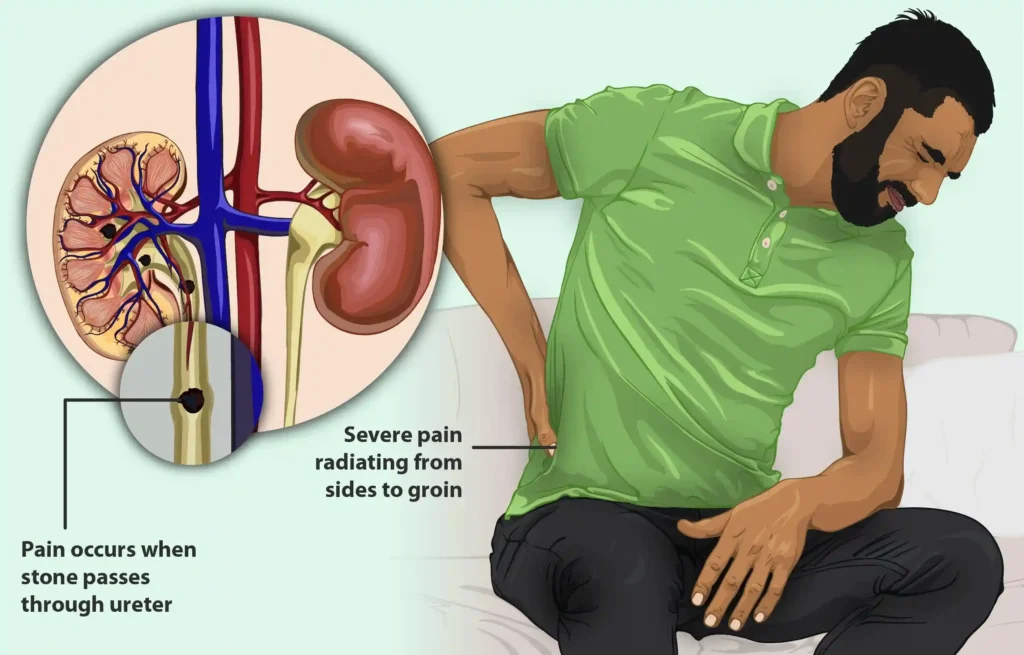
Kidney stones have earned a reputation for causing some of the most intense pain people experience.
The pain usually occurs when a stone moves through the urinary tract and interferes with the normal flow of urine. Rather than being a mild, steady discomfort, the pain can come in powerful waves and may radiate from the side or back toward the abdomen or groin.
For some people, the sudden onset is part of what makes the experience so overwhelming.
You might be perfectly fine one moment and then suddenly experience severe pain that makes it difficult to sit still or find a comfortable position.
Kidney stones can also cause symptoms such as nausea, vomiting, blood in the urine, or painful urination, depending on where the stone is located.
Not every kidney stone causes extreme pain, though. Small stones can sometimes pass with little discomfort, while others can become extremely painful.
That’s another reason a universal pain ranking is difficult: the same condition can feel completely different from one person to another.
4. Cluster Headaches

Cluster headaches are another condition frequently mentioned when people discuss extreme pain.
Unlike an ordinary headache, a cluster headache can cause severe pain around or behind one eye and often occurs in repeated attacks.
The attacks can be so intense that people may find it difficult to remain still. Some individuals describe the pain as burning, piercing, or unbearable.
What makes cluster headaches particularly difficult isn’t only the intensity.
They can occur repeatedly during a period known as a cluster period, meaning someone may experience attacks again and again rather than dealing with one isolated episode.
This is one reason cluster headaches are sometimes compared with childbirth and other severe forms of pain.
But again, comparisons should be treated carefully.
Pain is subjective, and there isn’t a medically accepted universal scale that can definitively declare one human experience “the most painful” for everyone.
| ❌ Myth | ✅ Fact |
|---|---|
| There is a scientifically proven list that ranks every type of human pain from #1 to #15. | There is no universal ranking that applies identically to every person. Pain is subjective and varies according to the condition and individual. |
| Childbirth is definitely the second-most painful experience for every human. | Childbirth can be extremely painful, but its intensity varies considerably, and there is no universal evidence establishing it as the world’s fixed #2 pain. |
| A more serious-looking injury always produces more pain. | Pain doesn’t always correspond perfectly to how an injury looks. Nerve damage, individual sensitivity, and other factors can change the experience. |
| Kidney stones are always more painful than childbirth. | Both can produce severe pain, but comparing them directly isn’t scientifically simple because people experience and report pain differently. |
| If someone needs pain medication during childbirth, they couldn’t handle labor naturally. | Choosing pain relief isn’t a measure of strength. ACOG recognizes maternal request as a sufficient reason for labor pain relief when there is no contraindication. (ACOG) |
5. Trigeminal Neuralgia
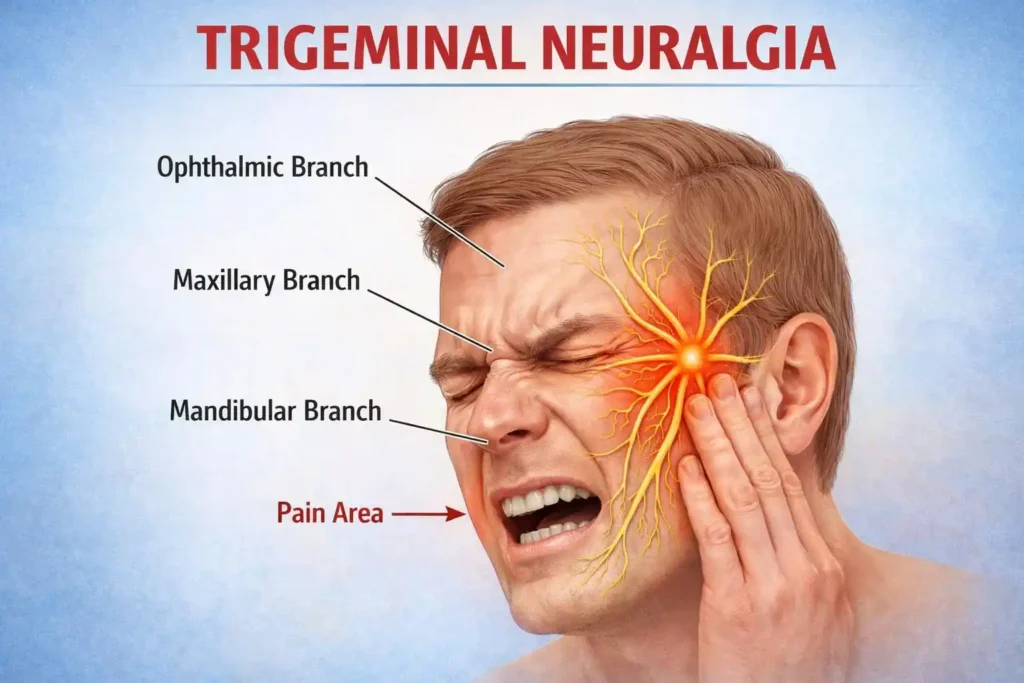
Trigeminal neuralgia is sometimes described as one of the most severe forms of facial pain.
The condition affects the trigeminal nerve, which carries sensation from the face to the brain. People with trigeminal neuralgia can experience sudden attacks of intense facial pain that may feel like an electric shock, stabbing sensation, or sharp burst of pain.
What makes it particularly difficult is that attacks can sometimes be triggered by seemingly ordinary activities.
Touching the face, brushing the teeth, washing, eating, or even a light breeze may trigger pain in some people.
Imagine something as normal as brushing your teeth becoming something you have to approach cautiously because it might trigger a sudden jolt of severe pain.
The attacks may be brief, but their intensity can make them extremely disruptive.
And because the pain can return repeatedly, the emotional burden can become significant as well.
6. Bone Fractures

A broken bone can cause immediate and significant pain, particularly when the injury occurs suddenly.
The pain may be accompanied by swelling, tenderness, difficulty moving the affected area, and sometimes an obvious change in the shape or position of the limb.
But even here, there isn’t one standard experience.
A small fracture in one location may be much less painful than a complex fracture involving significant tissue damage.
The surrounding muscles, ligaments, nerves, and other tissues can also contribute to the overall discomfort.
And the pain doesn’t necessarily disappear once the bone is placed in a cast or otherwise treated.
Healing can involve soreness, stiffness, limited movement, and discomfort as the body gradually repairs the injury.
For some fractures, rehabilitation becomes another important part of recovery.
That’s why the experience of a broken bone can involve much more than the moment when the injury happens.
7. Tooth Abscesses

Anyone who has experienced a serious tooth infection knows that dental pain can become surprisingly intense.
A tooth abscess is an infection that can develop around a tooth or in the surrounding tissues. It may cause severe toothache, sensitivity, swelling, and pain that can spread toward the jaw or face.
One reason dental pain can feel so overwhelming is that the mouth contains a large number of nerves in a relatively small area.
Simple activities such as eating, drinking, or even touching the affected tooth can become uncomfortable.
And unlike a temporary injury that gradually settles, an untreated dental infection may continue getting worse.
That’s why severe tooth pain shouldn’t simply be treated as something to “wait out.” Dental infections can require professional treatment, and symptoms such as facial swelling, fever, or difficulty swallowing require prompt medical attention.
8. Gallstones
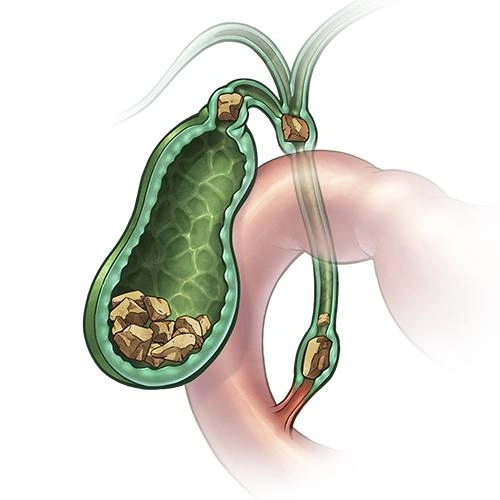
Gallstones can cause sudden and severe abdominal pain, particularly when a stone blocks one of the ducts involved in the movement of bile.
The pain is often felt in the upper right or upper middle part of the abdomen and may sometimes spread toward the back or right shoulder.
An attack can begin suddenly and may last for hours.
Some people also experience nausea or vomiting during an episode.
Like kidney stones, gallstones demonstrate why the word “painful” doesn’t always tell the whole story.
Some people have gallstones without experiencing symptoms at all. Others develop episodes of severe pain that lead them to seek urgent medical care.
The difference depends on whether the stones cause a blockage or other complications.
So although gallstones appear on many lists of painful medical conditions, the experience isn’t identical for everyone.
9. Shingles

Shingles is often associated with a painful rash, but the pain can sometimes be far more significant than the appearance of the skin suggests.
The condition occurs when the virus that causes chickenpox becomes active again. It usually produces a painful rash with blisters on one side of the body or face. The CDC notes that the pain can be severe, and some people develop postherpetic neuralgia, a type of nerve pain that can continue for months or even years after the rash disappears.
That lingering nerve pain is one reason shingles appears in conversations about severe pain.
For some people, the affected skin can become extremely sensitive. Clothing touching the area, lying against it, or even ordinary contact may become uncomfortable.
And unlike an injury that gradually disappears once the wound heals, nerve pain can sometimes continue after the visible signs of shingles have gone.
This makes shingles a good example of why pain isn’t always proportional to what you can see.
A relatively small area of skin can cause a surprisingly intense experience when nerves are involved.
10. Appendicitis
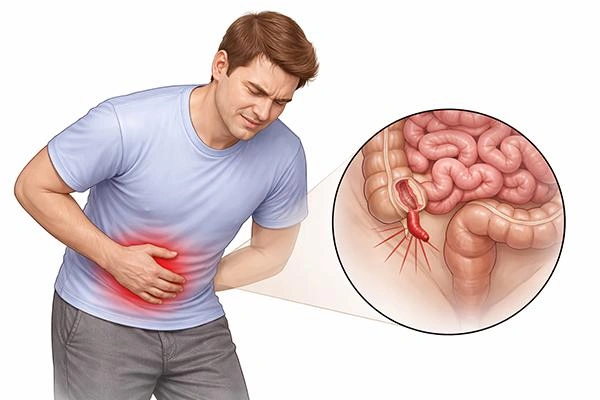
Appendicitis can begin with a pain that doesn’t immediately seem dramatic.
The discomfort often starts around the belly button and then moves toward the lower-right side of the abdomen as the condition develops. The NHS notes that the pain commonly becomes worse over time and may become more painful with movement, coughing, or pressure.
That progression is one reason people shouldn’t simply assume that abdominal pain will disappear on its own.
Other symptoms can include nausea, vomiting, loss of appetite, and fever.
If the appendix ruptures, the situation can become much more serious, with severe abdominal pain potentially spreading across the abdomen. Appendicitis requires urgent medical assessment and treatment.
So while appendicitis may not belong to a scientifically fixed “top 15,” it is certainly an experience that can produce significant acute pain and requires prompt attention.
11. Migraines

A migraine is much more than an ordinary headache.
A migraine attack can involve severe, throbbing head pain, often on one side of the head, along with nausea and sensitivity to light or sound. Some people also experience an aura involving visual changes, tingling, dizziness, or difficulty speaking.
For someone experiencing a severe attack, ordinary surroundings can suddenly become difficult to tolerate.
Bright lights may feel overwhelming.
Normal sounds can become irritating.
Movement may make the headache worse.
And an attack can last for hours or, in some cases, several days.
This is why describing migraine as simply “a bad headache” doesn’t capture the full experience.
The combination of pain and other neurological symptoms can make even ordinary daily activities difficult.
And because migraines can recur, people who experience them regularly may also have to deal with the uncertainty of wondering when another severe attack will appear.
12. Heart Attack

A heart attack isn’t simply included on a pain list because it can hurt. It’s a medical emergency that can cause chest discomfort ranging from pressure and squeezing to pain or fullness.
The American Heart Association explains that discomfort may occur in the center of the chest and can last several minutes or disappear and return. Pain or discomfort can also occur in the arms, back, neck, jaw, or stomach, and shortness of breath can occur with or without chest discomfort.
Not every heart attack feels identical.
Some begin suddenly and intensely, while others start more gradually.
That’s particularly important because someone might assume that a less dramatic sensation isn’t serious.
It can be.
If someone has symptoms that could indicate a heart attack, they should seek emergency medical help rather than trying to determine the cause themselves. The American Heart Association emphasizes that fast treatment matters.
So while we’re discussing painful experiences, remember that heart attack symptoms should never be treated as something to simply endure at home.
13. Sciatica
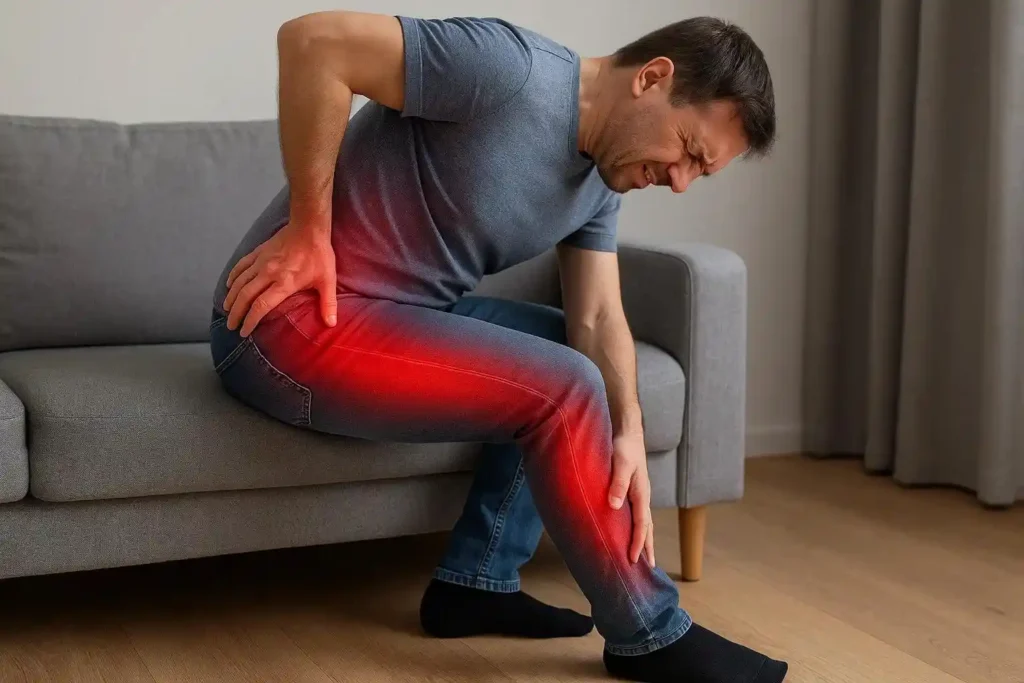
Sciatica can create a very different kind of pain from something like childbirth or a kidney stone.
Instead of being concentrated in one small area, the pain can travel along the path of the sciatic nerve—from the lower back through the buttock and down the back of one leg.
The NHS describes sciatica symptoms as potentially including sharp or burning pain, tingling, numbness, and weakness, usually affecting one side.
For some people, the sensation can feel like an electric or burning line running through the leg.
Movement, coughing, or sneezing may make the symptoms worse.
The condition often improves within several weeks to months, although it can last longer or return.
What makes nerve pain particularly frustrating is that even a small movement can sometimes trigger a significant change in sensation.
Sitting.
Standing.
Walking.
Turning.
Something that would normally require no thought can suddenly become uncomfortable.
14. Post-Surgical Recovery

When people talk about painful experiences, they sometimes focus only on injuries and diseases.
But surgery can create another type of pain: the pain that comes after the procedure while the body is healing.
The amount of postoperative pain depends heavily on the type of surgery, the location and size of the incision, the person’s individual response to pain, and other health factors. MedlinePlus explains that different operations can cause different amounts and types of pain, and that pain management is an important part of recovery.
The difficult part is that recovery doesn’t necessarily happen in a single moment.
A person may have soreness around an incision, swelling, limited movement, fatigue, and discomfort while trying to return to normal activities.
That’s why postoperative pain is often better understood as a recovery process rather than one isolated painful event.
Fortunately, modern medicine has many ways to manage pain after surgery. Doctors may use different medications or combinations of treatments depending on the procedure and the patient’s needs.
Good pain control can also make it easier for patients to move around safely and participate in their recovery.
15. Severe Muscle Cramps

Muscle cramps may be short-lived, but anyone who has experienced a particularly intense one knows how suddenly painful they can become.
A cramp happens when a muscle suddenly tightens and causes pain that can make movement difficult. The NHS notes that leg cramps often occur at night or while resting and can last from a few seconds to around 10 minutes.
The pain can arrive without much warning.
One moment you’re resting normally.
The next, a muscle is suddenly tight, hard, and extremely uncomfortable.
The calf is a common location, although cramps can also affect the feet and thighs.
Even after the cramp releases, the muscle may remain sore for hours afterward.
Severe cramps are a good reminder that duration and intensity aren’t the same thing.
A painful experience doesn’t have to last for days to feel extreme in the moment.
Why There Isn’t One Universal “Most Painful” Experience
After looking at all 15 experiences, it’s tempting to ask one final question:
So which one is actually the most painful?
Unfortunately, medicine doesn’t have a universal answer.
Pain is personal.
Two people can experience the same condition and describe completely different levels of discomfort. Even the same person may experience the same condition differently at different times.
Researchers can measure pain using scales and questionnaires, but those measurements still rely heavily on a person’s own report.
That’s why statements such as “childbirth is definitely #2” should be treated as interesting comparisons rather than established universal medical rankings.
The Pinterest claim makes a great curiosity hook—but the reality is much more nuanced.
Childbirth can be extraordinarily painful.
Kidney stones can be extraordinarily painful.
Cluster headaches, severe burns, trigeminal neuralgia, and other conditions can also produce extreme pain.
There isn’t one experience that every human being would agree is objectively the worst.
And perhaps that’s the most important takeaway from this entire list.
When Severe Pain Should Never Be Ignored
A list like this can be fascinating to read, but it shouldn’t encourage anyone to compare their symptoms with someone else’s pain and decide whether medical care is necessary.
Severe or unexplained pain deserves attention.
For example, sudden severe chest pain, pressure, shortness of breath, sweating, nausea, or pain spreading to the arm, back, neck, jaw, or stomach can be warning signs of a heart attack and require emergency help.
Similarly, severe abdominal pain that is worsening or moving toward the lower-right side can require urgent evaluation because appendicitis is one possible cause.
And a sudden, extremely painful headache—particularly one accompanied by neurological symptoms—should also receive urgent medical attention.
The point of this list isn’t to decide whose pain is “bad enough.”
It’s to understand just how many different ways the human body can experience severe pain—and why the person experiencing it is always the best source of information about what they’re feeling.
Pain rankings can be interesting.
Real pain is personal.