Take a look at your little finger for a moment. You may have seen claims that the way your little finger lines up with your other fingers can reveal surprising things about your personality—and even tell you something about certain health risks.
There is some real scientific research behind finger proportions, but viral posts often make the findings sound much more certain than they really are. In this article, we’ll show you how to look at the A, B, and C finger patterns from the viral image, what researchers have actually studied about finger ratios, and what you should—and shouldn’t—read into your result.
1. First, What Does Your Little Finger Length Actually Mean?
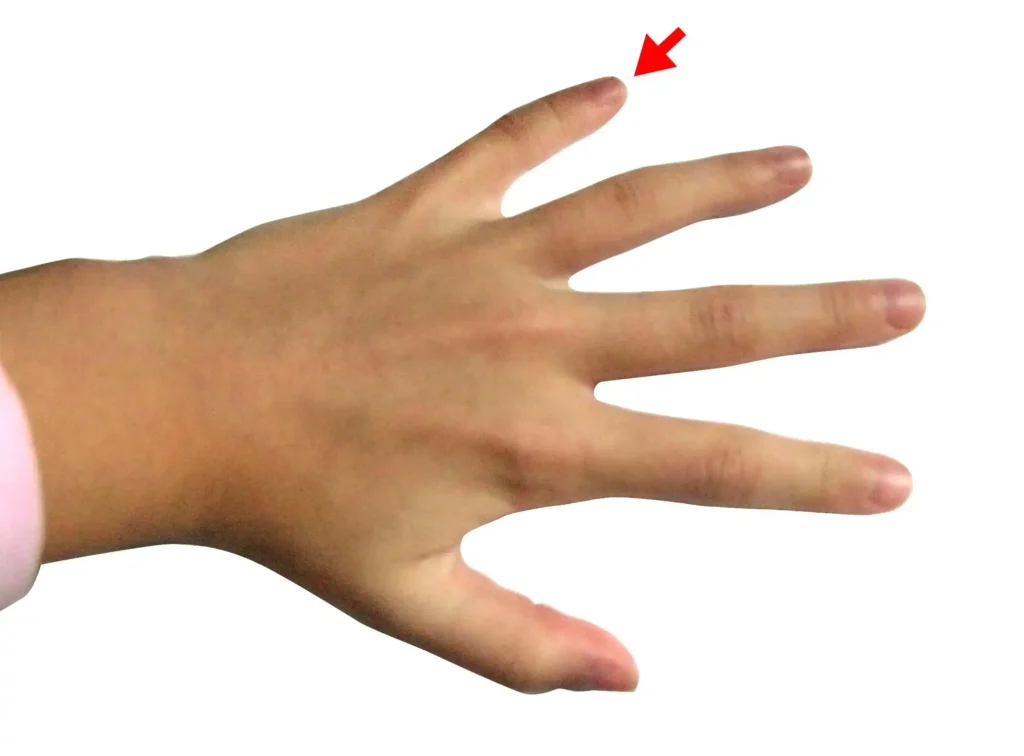
The first thing to understand is that finger length is not a personality test.
Your fingers develop according to a combination of genetics, growth, and biological factors. Researchers have also studied the proportions between different fingers—particularly the ratio between the index finger and ring finger, known as the 2D:4D ratio. This has been investigated as a possible marker related to prenatal hormone exposure.
But there’s an important difference between what scientists study and what viral Pinterest graphics often claim.
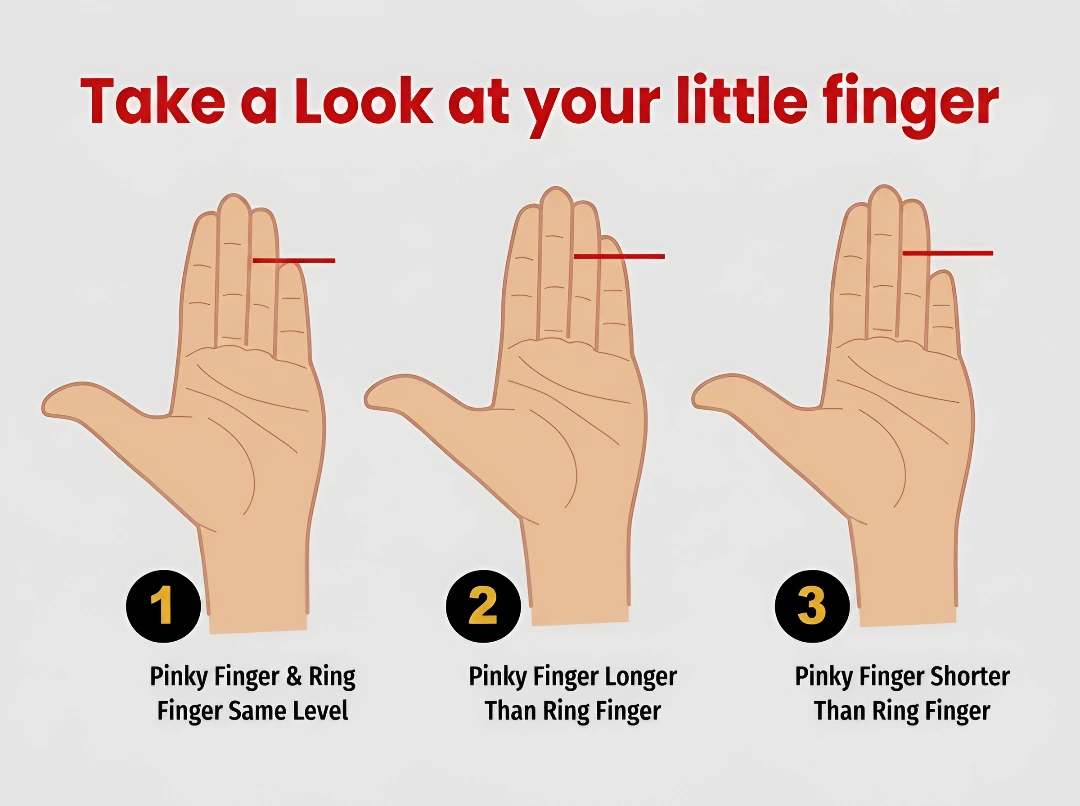
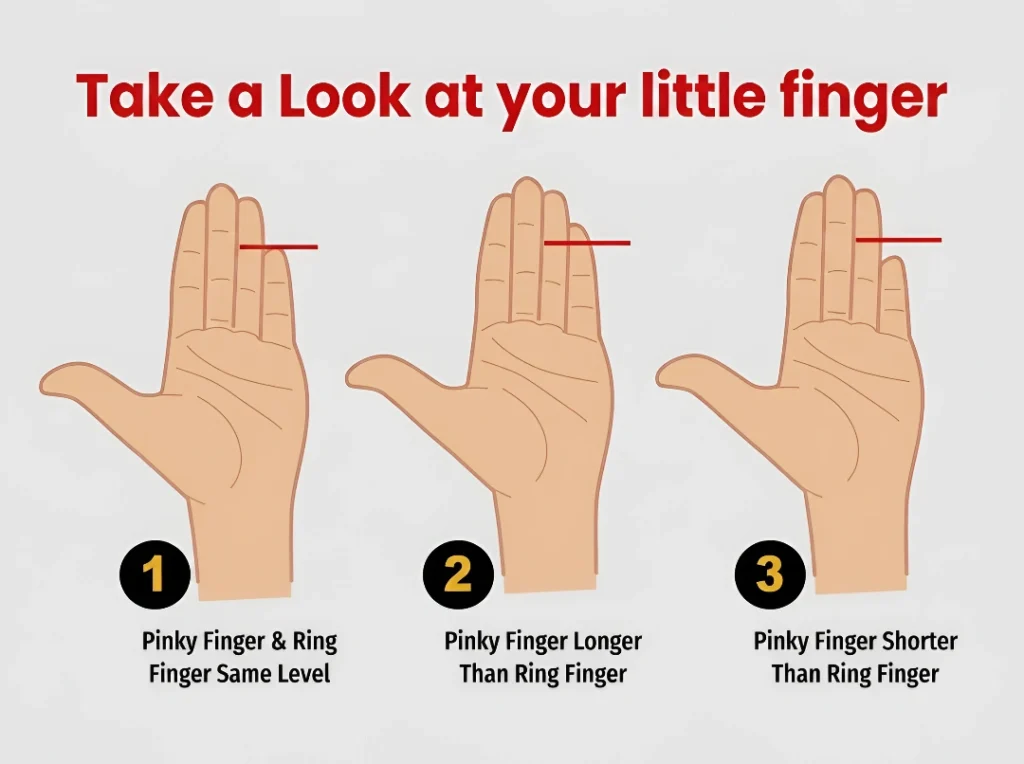
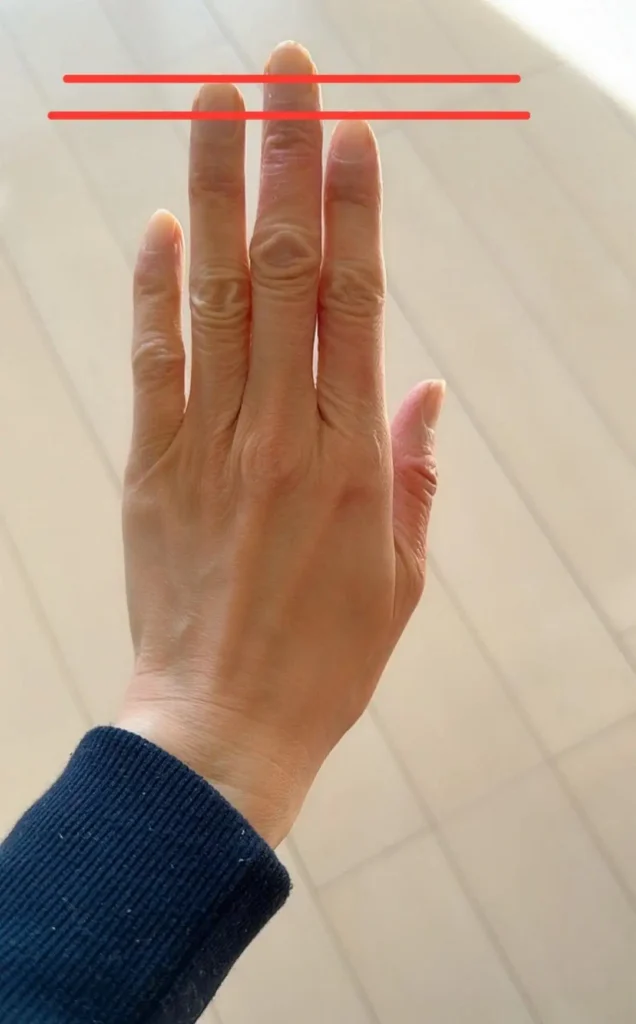
The image you’ve seen focuses specifically on the little finger and shows three possible positions:
- A: the little finger extends relatively high
- B: it reaches around the upper crease of the neighboring finger
- C: it appears noticeably shorter
These visual categories can be fun to compare with your own hand.
However, the scientific literature doesn’t establish that simply having an A, B, or C-shaped little finger determines your personality or tells you exactly which health problems you’ll develop.
That’s where the viral claim goes too far.
Still, there is enough research into finger proportions to make the subject genuinely interesting.
And that’s what makes this worth exploring.
2. Take a Look at Your Little Finger: Are You A, B, or C?
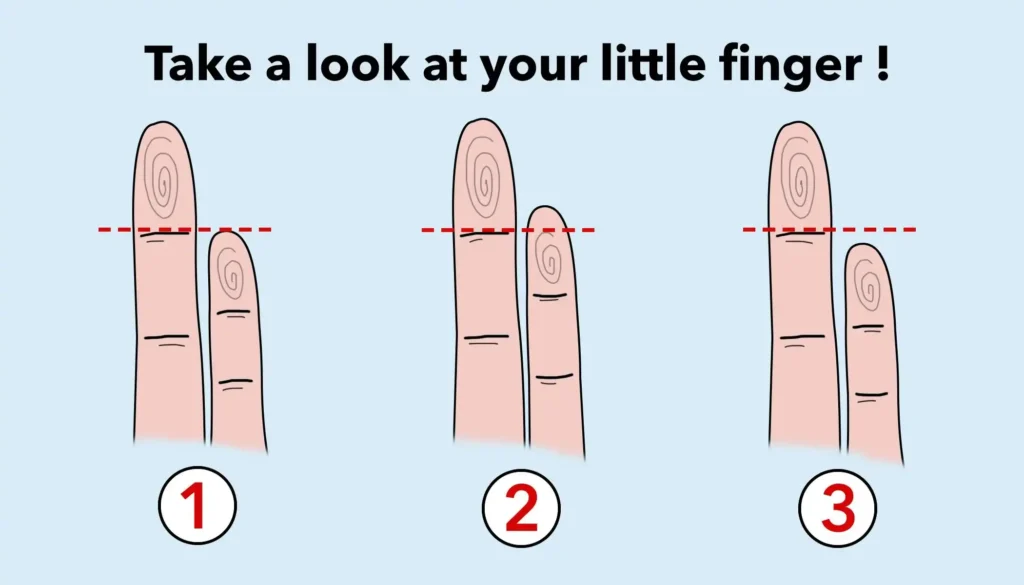
Now it’s time to compare your own hand with the viral image.
Hold your hand naturally with your fingers together and look at where the tip of your little finger reaches compared with the neighboring finger.
A — The Longer Little Finger
If your little finger extends relatively high compared with the reference point shown in the image, you would fall into the A category for this viral test.
B — The Middle Pattern
If your little finger reaches approximately around the upper crease of the neighboring finger, you would be closer to B.
C — The Shorter Pattern
If your little finger appears noticeably lower than the reference point, you’d fall into the C category.
It’s easy to see why this kind of test becomes popular online.
You don’t need a ruler, an app, or a complicated calculation.
You simply look at your hand and immediately get curious about what your result supposedly means.
But before you attach a personality label or health prediction to your result, there’s something important to understand:
This A/B/C classification is a viral visual test—not an established medical diagnostic system.
So don’t worry if your hand doesn’t look exactly like one of the examples.
Human hands naturally come in many different shapes and proportions.
3. Why Do Scientists Study Finger Ratios in the First Place?
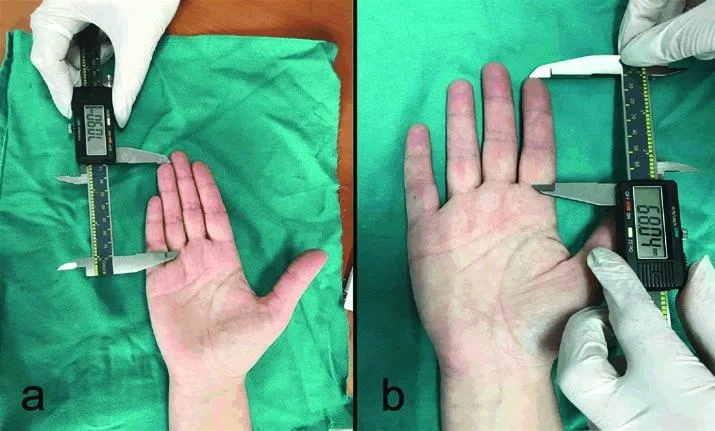
This is where the story gets much more interesting.
Scientists have spent years studying the proportions between fingers, especially the second-to-fourth digit ratio, or 2D:4D. The idea behind this research is that finger proportions may be influenced in part by biological factors during early development, including prenatal sex-hormone signaling.
That doesn’t mean your fingers are a crystal ball.
Instead, researchers have asked whether small differences in finger proportions are statistically associated with certain traits or outcomes across groups of people.
That’s a very different claim.
For example, some studies have reported associations between lower 2D:4D ratios and traits such as aggression or sensation seeking. But even the researchers describing these associations have characterized the predictive effects as weak.
Other large studies have found little or no meaningful relationship between digit ratios and particular personality traits. One study involving more than 2,000 participants found only weak associations with some personality measures, while another large replication found no relationship between 2D:4D and assertiveness.
That’s why you should be careful whenever a social-media post says something like:
“Your finger length proves you’re this type of person.”
Science doesn’t work that way.
A statistical association between two measurements does not mean that one measurement determines an individual’s personality.
Your personality is shaped by a huge combination of factors—including genetics, environment, experiences, relationships, culture, and countless individual differences.
Your fingers don’t get to make all the decisions.
4. Can Your Fingers Really Tell You About Your Personality?

This is probably the part that makes these finger-length posts so irresistible.
Everyone wants to know whether something as simple as their hand can reveal a hidden part of who they are.
Researchers have investigated possible relationships between digit ratios and traits such as aggression, sensation seeking, assertiveness, extraversion, neuroticism, and other behavioral characteristics. But the findings are mixed, and many reported relationships are small or fail to replicate consistently.
For example, one large study found no association between 2D:4D and assertiveness, while another study found only weak associations with certain personality measures.
So if the viral graphic tells you that one particular finger shape means you’re automatically confident, emotional, aggressive, caring, introverted, or adventurous, take that interpretation as entertainment rather than a psychological assessment.
You might recognize yourself in a description.
You might completely disagree with it.
Both outcomes are normal.
That’s partly because generalized personality descriptions can feel surprisingly accurate even when they aren’t specifically predicting anything about you.
The more scientifically reasonable takeaway is much simpler:
Finger proportions are an interesting subject of biological research, but they cannot reliably define an individual’s personality.
And that distinction becomes even more important when a viral post moves from personality into health risks.
5. Can Finger Length Really Predict Your Health Risks?

This is where the viral claim needs a little more context.
Researchers have investigated 2D:4D finger ratios in relation to a surprisingly wide range of health conditions, including cardiovascular and metabolic health. A 2025 systematic review found that several studies reported associations between lower 2D:4D ratios and increased cardiometabolic risk, particularly in men—but other studies found no significant association. The review concluded that the evidence remains inconsistent and that larger, long-term studies are still needed.
That distinction is extremely important.
An association does not mean that your finger length causes a disease or can predict that you will develop one.
For example, researchers may notice that a particular finger ratio appears more frequently among people with a certain condition. That can lead to an interesting scientific question—but it doesn’t turn finger measurement into a diagnostic test.
Your blood pressure, cholesterol, blood glucose, family history, lifestyle, age, medications, and many other established factors are far more useful when doctors actually assess health risk.
So if your little finger matches the pattern shown in the Pinterest image, there’s no reason to panic or assume you have a particular health problem.
Your hand is not a medical screening tool.
6. Why Viral Finger-Length Tests Often Sound More Certain Than the Science
There’s a big difference between saying:
“Researchers have found an association.”
and saying:
“Your finger determines your health and personality.”
The first statement can describe scientific research.
The second turns a statistical observation into a personal prediction.
That’s exactly where many viral graphics lose important context.
A study might find that people with one particular finger ratio have a slightly different average risk of something. But that doesn’t mean every person with that ratio will develop the condition.
The same problem applies to personality.
A person’s behavior isn’t controlled by one physical measurement. Personality develops through a complicated combination of biological, psychological, social, and environmental influences.
Even recent research into digit ratios continues to emphasize uncertainty. For example, a 2025 systematic review examining cardiometabolic risk found both positive and null results across the studies it reviewed.
So these Pinterest tests are best approached as:
“That’s interesting—let’s see what the research says.”
Not:
“My finger has just revealed my future.”
That small difference can keep a fun viral test from becoming unnecessary health anxiety.
7. So What Can Your Finger Actually Tell You?
After all of this, you might be wondering whether the A, B, or C result means anything at all.
It can tell you something very simple:
You have a particular finger proportion.
And that’s perfectly normal.
Finger length varies naturally between individuals. Genetics, development, sex, age, and other biological factors all contribute to differences in hand and finger shape.
The research becomes interesting when scientists compare these measurements across large groups of people.
But group-level patterns shouldn’t be turned into individual predictions.
So if you looked at your hand and got A, you don’t suddenly have a fixed personality.
If you’re B, there’s no scientifically established personality type attached to you.
And if you’re C, your finger doesn’t predict a particular disease.
You can absolutely enjoy the comparison and see whether the personality description feels relatable—but treat it as fun information rather than a diagnosis or personality assessment.
And if you’re genuinely concerned about a health risk, it’s much more useful to discuss that concern with a healthcare professional than to rely on a finger-length chart.
| ❌ Myth | ✅ Fact |
|---|---|
| Your little finger determines your personality. | Finger proportions have been studied in relation to certain traits, but the evidence does not establish that finger length determines an individual’s personality. |
| A particular finger shape means you will develop a specific disease. | Some studies have found associations between digit ratios and certain health conditions, but the evidence is inconsistent and does not make finger length a diagnostic tool. (PubMed) |
| The A, B, and C patterns in viral posts are medically recognized personality types. | These categories are a simplified internet presentation, not an established medical or psychological classification system. |
| A lower digit ratio automatically means higher testosterone. | 2D:4D has been proposed as a proxy for prenatal androgen exposure, but using an adult finger ratio as a precise measure of what happened before birth has important limitations. |
| Your finger length is more useful than real health testing. | Established medical measurements and professional evaluation are far more appropriate for assessing individual health risks. |
The Bottom Line: It’s Interesting, But Your Fingers Don’t Define You

The viral little-finger test is certainly interesting—and it’s easy to understand why people stop scrolling when they see it.
You look at your hand, choose A, B, or C, and suddenly you’re curious about what the result supposedly says about you.
There is genuine scientific research into finger proportions, particularly the 2D:4D ratio, and researchers have investigated possible relationships with health and behavioral characteristics. Some recent reviews have found potentially interesting associations, while also emphasizing that the evidence isn’t consistent enough to make strong individual predictions.
So enjoy the test.
Compare your fingers.
See whether the description sounds like you.
But don’t let a Pinterest graphic convince you that your hand has already written your personality—or your health future.
Your fingers can be interesting clues in scientific research, but they aren’t a crystal ball.